Executive Summary: Perplexity SEO is the practice of optimizing content to be retrieved and cited by Perplexity’s real-time answer engine rather than chasing a single #1 position. Perplexity’s Retrieval-Augmented Generation (RAG) architecture pulls an average of 20+ distinct citations per query [¹], weighting extraction quality, factual density, and 30-day content freshness above traditional domain authority [²]. Winning visibility requires structured text formatting, continuous content refreshes, and verified data consistency across e-commerce product feeds.
Key Takeaways
- Citations Over Rankings: Perplexity synthesizes real-time web search results, citing an average of 22 sources per query [¹] compared to 4–8 for Google AI Overviews and ~8 for ChatGPT Search [¹].
- The Recency Advantage: Content published or updated within the last 30 days receives a significant retrieval boost in live RAG pipelines [²].
- Extraction Quality Beats Domain Rating: Perplexity evaluates how easily a factual claim can be extracted from a page chunk. Clear, standalone facts on newer domains frequently out-cite legacy sites [²].
- E-Commerce & Comet Impact: Perplexity Shopping and the Comet browser evaluate product spec sheets, pricing, and fulfillment speed for factual consistency before generating product recommendations [³].
- No Link Equity Value: Buying traditional backlinks to improve PageRank yields minimal return in Perplexity. Resources are better spent on 30-to-45-day content refresh cycles [²].
What Makes Perplexity Different From Google and ChatGPT?
Google ranks pages to generate click-through lists. Perplexity retrieves and synthesizes page chunks to generate direct conversational answers with inline numerical citations [¹].
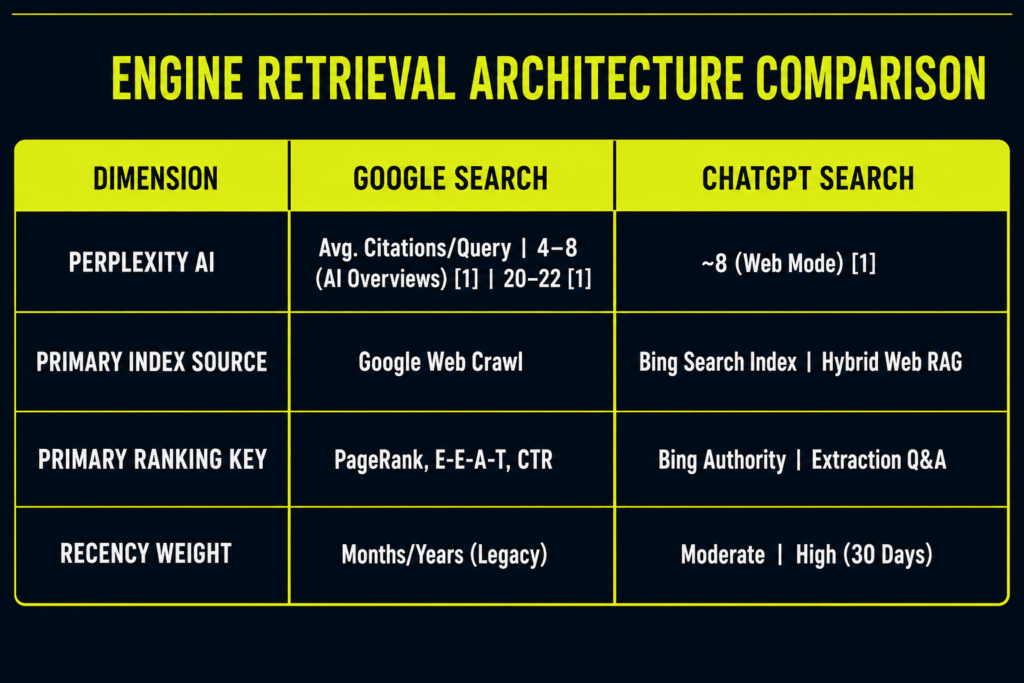
Understanding these structural distinctions changes the optimization goal:
- Google: Competes for positions 1–3 on a single list of links.
- ChatGPT: Draws on Bing’s search index to answer conversational prompts with sparse link attributions [¹].
- Perplexity: Assembles candidate pages into a broad citation pool, citing dozens of sources per answer [¹].
To see how Perplexity compares across the broader AI ecosystem, explore our pillar guide on AI Search Engines Compared.
How Does Perplexity Actually Choose What to Cite?
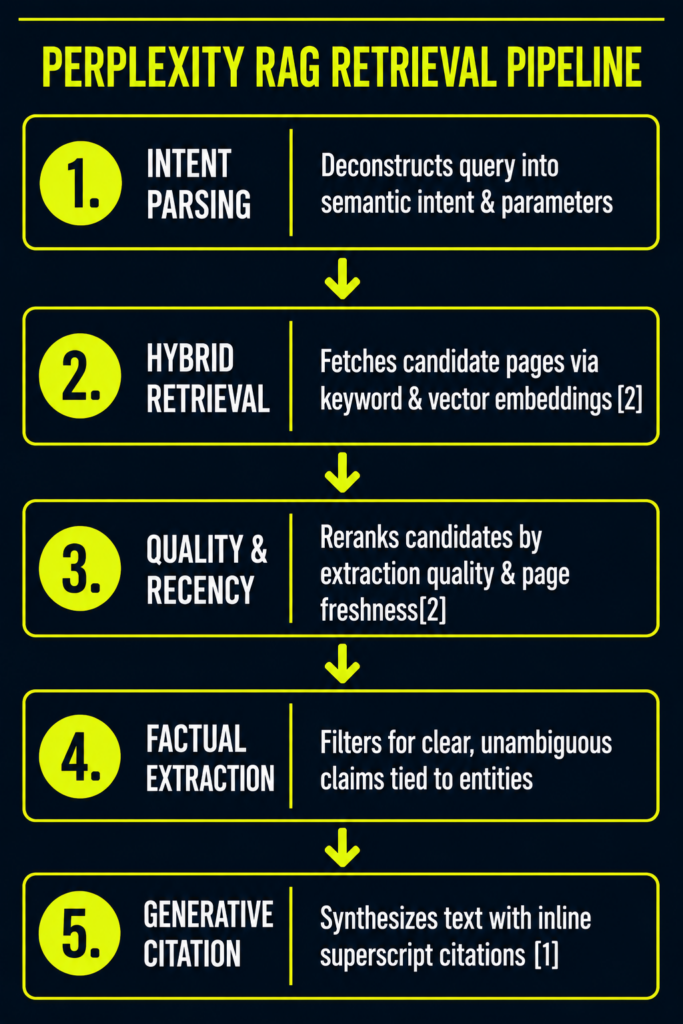
Perplexity operates using a multi-stage Retrieval-Augmented Generation (RAG) pipeline designed to extract facts rather than measure domain link equity [²]
Why Domain Authority Matters Less Here
Perplexity prioritizes extraction quality—how cleanly a factual statement can be lifted out of an HTML block without semantic ambiguity [²]. A niche brand that states technical specs clearly in a lead paragraph will out-cite a major enterprise brand whose product details are buried inside promotional copy [²].
The 30-Day Recency Signal
Perplexity executes a live web search for every query rather than relying solely on pre-trained memory [³]. As a result, content updated recently receives immediate visibility in live RAG pipelines [²].
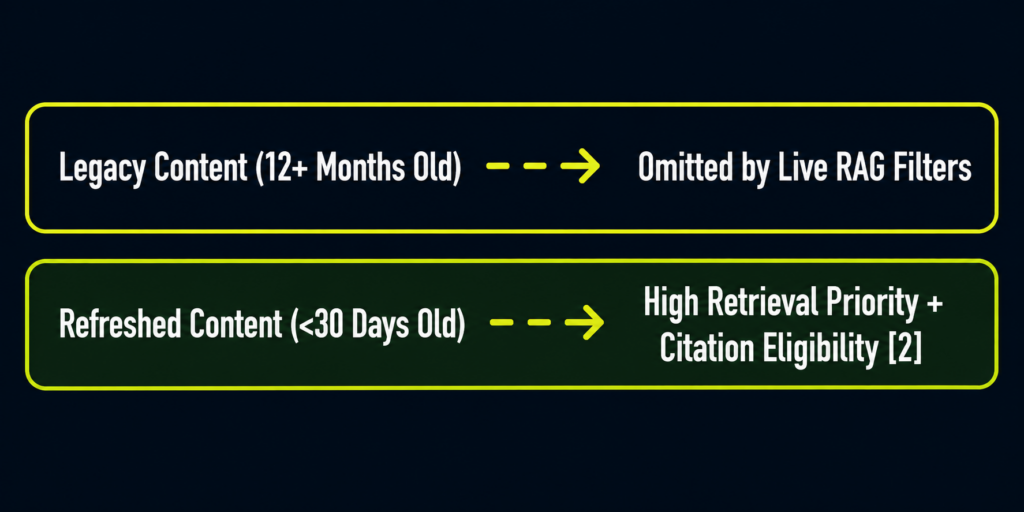
- The Recency Boost: Multiple industry analyses indicate that pages updated within 30 days receive higher retrieval priority for commercial and technical prompts [²].
- Fast Index-to-Citation Windows: New or updated pages can appear in Perplexity citations within days, bypassing the multi-month link-building cycles required by traditional search engines [²].
Perplexity Pages, Comet Browser, and E-Commerce Discovery
As Perplexity expands its ecosystem, e-commerce and DTC brands must manage visibility across two proprietary interfaces [³]:
1. Perplexity Pages
Perplexity Pages is a native publishing tool that compiles research into structured, publicly shareable articles within Perplexity’s library [³]. E-commerce brands should use Pages selectively as a secondary distribution channel for evergreen guides, while maintaining core content on owned domains to control conversion funnels.
2. Perplexity Shopping & The Comet Browser
Perplexity’s Comet browser and shopping features synthesize product specifications, pricing, stock availability, and shipping timelines into inline comparison summaries [³].
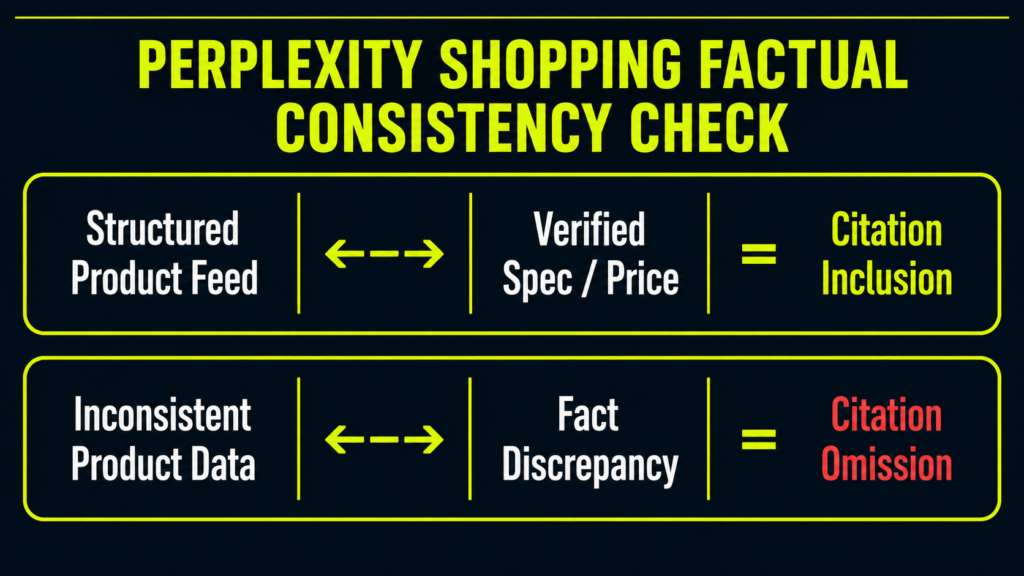
Inaccurate shipping fees, conflicting ingredient lists, or outdated pricing across distributor sites flag factual inconsistencies, causing RAG filters to omit product listings from citation cards [³].
4 Costly Habits to Stop Immediately
- Buying Backlinks for AI Search: Link-building campaigns designed for Google’s PageRank do not improve Perplexity RAG scoring [²]. Reallocate backlink budgets to content refresh workflows.
- Chasing a Single “Rank #1” Spot: Perplexity outputs unranked citation sets containing 20+ sources [¹]. Focus on consistently securing placement in the citation pool.
- Publishing Unfocused “Ultimate Guides”: Padded, low-density content gets filtered out during the RAG quality phase [²]. Write concise, fact-dense paragraphs that answer specific questions immediately.
- Allowing Cornerstone Content to Age Out: Leaving high-value product or comparison pages untouched for over 90 days forfeits the recency boost to competitors who refresh their pages monthly [²].
The 30-Day Perplexity Visibility Action Plan
Execute this 4-week optimization pipeline to structure content for Perplexity’s RAG retrieval engines.
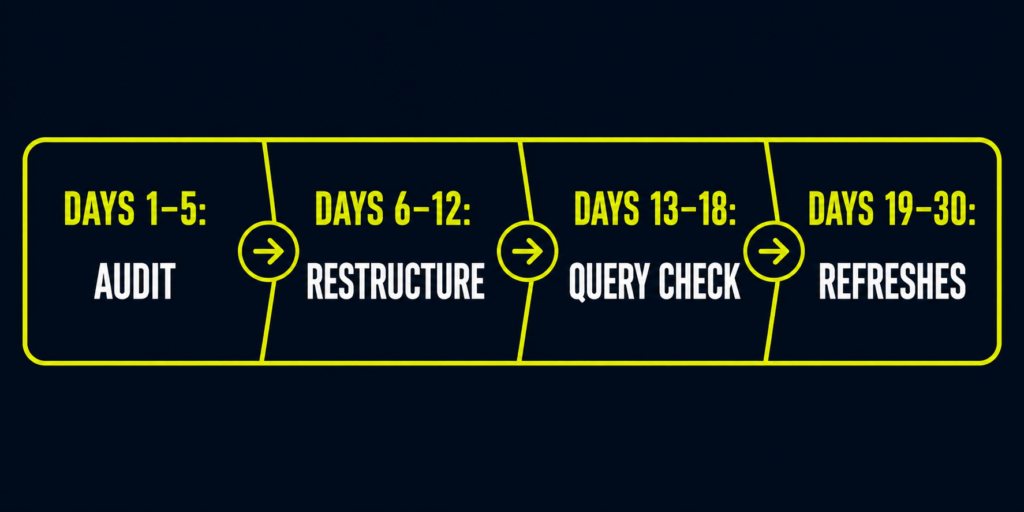
Days 1 to 5: Audit Key Landing Pages
- Identify your top 15 to 20 commercial, product, or guide pages.
- Flag any page that has not been updated within the last 90 days [²].
- Identify pages where core facts, pricing, or specifications are buried beneath promotional copy.
Days 6 to 12: Restructure Content for Machine Extraction
- Rewrite section lead paragraphs to state primary facts within the first two sentences [²].
- Add logical subheadings (H2, H3), HTML comparison tables, and bulleted technical lists.
- Add explicit dateModified schema tags reflecting current content updates.
Days 13 to 18: Audit Live AI Query Outputs
- Run 20 to 30 buyer intent prompts directly in Perplexity.
- Log whether your domain appears in the citation set, identify cited competitors, and analyze the structural format of winning sources [¹].
Days 19 to 23: Standardize Product and Spec Data
- Verify that SKU attributes, pricing, stock status, and shipping terms match across your website, marketplace feeds, and product comparison pages [³].
Days 24 to 30: Establish a 30-Day Refresh Cadence
- Schedule recurring calendar reminders to review and update your top 10 commercial pages every 30 to 45 days [²].
- Track multi-platform visibility using the strategies outlined in our guide to Tracking AI Search Visibility Across Platforms.
If your brand needs a dedicated partner to execute this strategy, our agency provides specialized AI Search Optimization for growing e-commerce and B2B brands.
Partner with National Positions for Advanced GEO
Transitioning from traditional SEO to Generative Engine Optimization requires dedicated technical data engineering, content extraction modeling, and cross-platform citation monitoring.
National Positions provides complete Generative Engine Optimization solutions:
- 22+ Years of Performance Engineering: Managing search and analytics operations for over 300 e-commerce and B2B brands.
- Google Premier Partner Leadership: Recognized in the top tier of performance marketing agencies globally.
- The PACE Framework: Our methodology (Plan, Analyze, Convert, Expand) anchors AI search optimization in verified business revenue.
- First-Party Attribution via AdBeacon: Our proprietary first-party attribution platform, AdBeacon, tracks multi-touch user journeys across paid, organic, and AI discovery engines.
Ready to audit your brand’s visibility across Perplexity, ChatGPT, and Google AI Overviews? Talk to our AI search team to evaluate your current citation baseline and build a platform-specific GEO strategy.
Frequently Asked Questions
What is Perplexity SEO?
Perplexity SEO (or Generative Engine Optimization for Perplexity) is the practice of structuring, updating, and formatting content so Perplexity’s RAG pipeline can retrieve, verify, and quote it within AI-generated answer cards [¹].
How can a brand increase its citations on Perplexity?
Maintain a 30-day content refresh cadence, place clear factual statements at the top of sections, verify product data consistency across feeds, and implement clear HTML table formatting [²] [³].
Does domain authority influence Perplexity search visibility?
Domain authority plays a secondary role compared to traditional search engines [²]. Perplexity prioritizes extraction quality, factual density, and content freshness over domain link equity [²].
Is publishing on Perplexity Pages necessary for GEO?
No. Perplexity Pages serves as an optional secondary distribution channel for evergreen guides [³]. Primary optimization efforts should focus on your owned domain, where you maintain full control over conversion paths.
How frequently should high-value content be updated for Perplexity?
Updating high-priority commercial pages every 30 to 45 days leverages Perplexity’s live web retrieval recency boost [²].
How does Perplexity optimization differ from ChatGPT optimization?
Perplexity operates a standalone web RAG pipeline citing 20+ sources per query [¹]. ChatGPT Search relies primarily on Bing’s search index and cites sources significantly less often [¹]. For details on OpenAI’s retrieval architecture, read The ChatGPT Search Playbook.
Sources & References
- Discovered Labs, “AI Chatbot Citation Density & RAG Benchmark Study,” Comparative Search Analytics (2026) [¹].
- Simple Solutions, “Information Extraction Quality vs. PageRank in Generative AI Search Engines,” Technical RAG Retrieval Benchmarks (2026) [²].
- Perplexity AI Developer Disclosures, “Perplexity Pages, Comet Browser Architecture, and Live Web Search Mechanics,” Product Feature Disclosures (2026) [³].